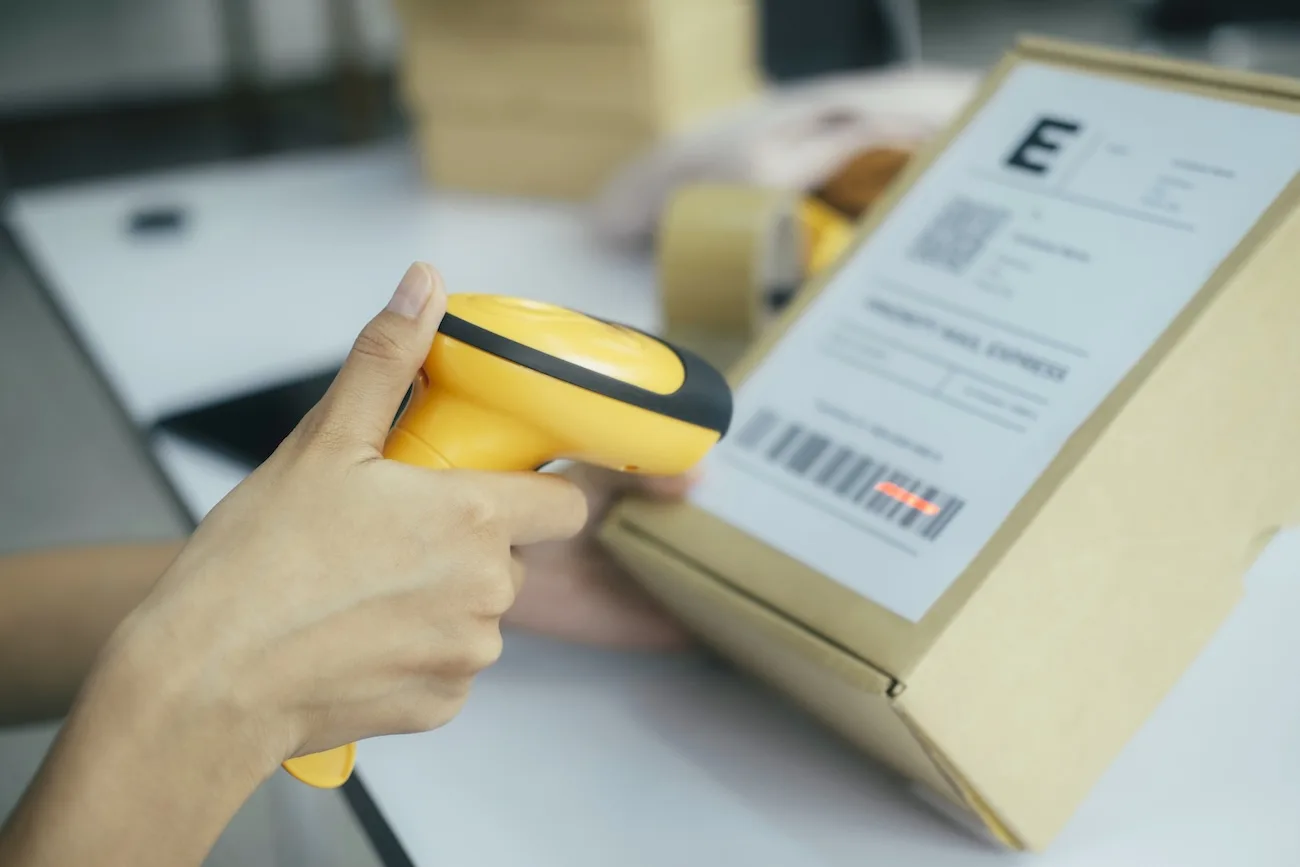
Choosing between a GS1 QR code and Data Matrix is not just a design decision. It affects how your product is scanned, how much data you can carry, whether consumers can use their phone cameras, and how well your packaging fits retail, healthcare, traceability, and digital product experience workflows.
The confusing part is that “Data Matrix” can mean different things in different GS1 contexts. Some teams mean GS1 DataMatrix, which is widely used for structured supply-chain and healthcare workflows. Others mean Data Matrix with GS1 Digital Link URI syntax, which is closer to a web-connected Digital Link use case. Meanwhile, many consumer-facing product experiences are moving toward QR Codes powered by GS1.
Quick answer: Use a QR Code powered by GS1 when consumer smartphone scanning and web-connected product experiences are important. Use GS1 DataMatrix when your industry, scanner environment, or supply-chain workflow already expects it, especially in healthcare and operational contexts. Use Data Matrix with GS1 Digital Link only when you need Digital Link syntax but have a reason to prefer Data Matrix over QR.
The three options you need to understand
Before comparing QR codes and Data Matrix, it helps to separate the three common GS1-related options. They are related, but they are not interchangeable.
| Option | What it usually means | Best fit |
|---|---|---|
| QR Code powered by GS1 | A QR Code using GS1 Digital Link URI syntax | Consumer engagement, product pages, packaging experiences, smartphone scanning |
| GS1 DataMatrix | Data Matrix using GS1 element string syntax | Healthcare, fresh foods, logistics, controlled scanner environments, operational data capture |
| Data Matrix with GS1 Digital Link | Data Matrix using GS1 Digital Link URI syntax | Specific retail or packaging workflows where Digital Link is needed but Data Matrix is preferred |
Simple way to think about it: QR Code powered by GS1 is usually the most consumer-friendly option. GS1 DataMatrix is often the stronger operational and industry-specific option.
GS1 QR code vs Data Matrix at a glance
The right choice depends on the scan audience, device environment, packaging constraints, and data requirements.
| Factor | QR Code powered by GS1 | GS1 DataMatrix | Data Matrix with GS1 Digital Link |
|---|---|---|---|
| Consumer smartphone scanning | Strongest fit | Not the main use case | Possible, but less universally automatic on phones |
| Web connection | Yes, through GS1 Digital Link | Not the core strength | Yes, through GS1 Digital Link |
| Healthcare and regulated workflows | Usually not the default | Commonly preferred | Depends on implementation and sector rules |
| Retail packaging engagement | Very strong fit | Useful when operations dominate | Possible for specific packaging strategies |
| Small-space packaging | Can work, but may need more quiet zone and careful sizing | Often efficient in compact operational labels | Can be compact, but needs scanner and smartphone testing |
| Best default for consumer-facing product QR | Yes | No, unless the sector requires it | Only when there is a specific reason |
Practical takeaway: QR Code powered by GS1 is usually the better consumer-facing packaging choice. GS1 DataMatrix is usually the better choice when your workflow is built around controlled scanners, healthcare, traceability, or operational data capture.
When to use a QR Code powered by GS1
A QR Code powered by GS1 is usually the strongest choice when the product package needs to serve both product identity and consumer engagement. It is familiar to shoppers, works naturally with smartphone cameras, and can connect to a branded web experience through GS1 Digital Link.
Choose QR Code powered by GS1 when:
- Consumers are expected to scan with phones
- You want to open product pages, instructions, videos, or sustainability details
- Your brand wants a visible consumer-facing code on packaging
- You want a web-connected product identity through GS1 Digital Link
- The code needs to feel familiar and approachable to shoppers
Good examples:
- Food and beverage packaging with ingredient or allergen pages
- Beauty products with tutorials or sustainability information
- Consumer goods with product videos, reviews, or manuals
- Retail packaging that needs one code for product identity and digital engagement
For consumer trust, it is also usually better to use a brand-controlled destination where possible. The QR code should clearly belong to the product and open a page that matches the printed promise.
When to use GS1 DataMatrix
GS1 DataMatrix is usually the stronger choice when the code is mainly for operational, regulated, or industry-specific workflows rather than consumer smartphone engagement. It is common in environments where scanners, systems, and business processes already expect GS1 element string syntax.
Choose GS1 DataMatrix when:
- Your industry or customer requires GS1 DataMatrix
- Healthcare, pharmaceutical, or medical-device workflows are involved
- Traceability and operational scanning are the main goals
- The code is scanned by controlled devices rather than shoppers’ phones
- You need compact structured data for internal workflows
Good examples:
- Healthcare product identification
- Traceability labels
- Fresh foods and batch-level workflows
- Logistics and supply-chain units
- Controlled scanner environments
If your goal is mainly consumer engagement, GS1 DataMatrix may not be the best default because many consumers expect QR codes and may not know what to do with a Data Matrix symbol.
When to use Data Matrix with GS1 Digital Link
Data Matrix with GS1 Digital Link sits between the other two options. It can use GS1 Digital Link URI syntax, but it does not always provide the same consumer-friendly phone-camera experience as a QR Code.
This option can make sense when you need the web-compatible Digital Link structure but have packaging, scanner, or internal requirements that point toward Data Matrix rather than QR Code.
Important: Do not choose Data Matrix with GS1 Digital Link just because it sounds more technical. Choose it because your scanner environment, packaging constraints, or implementation plan actually calls for it.
Decision guide for brands
If you are a brand owner deciding what to put on packaging, start with the scan audience and the primary business goal.
| Question | If yes | Likely direction |
|---|---|---|
| Will consumers scan this with phone cameras? | You need an easy consumer experience | QR Code powered by GS1 |
| Is the product in healthcare or a regulated operational workflow? | Industry rules and established scanner workflows matter most | GS1 DataMatrix |
| Do you need web-connected product identity? | The code should support product identity and online content | QR Code or Data Matrix with GS1 Digital Link |
| Is packaging space extremely tight? | Symbol size and scanner performance become critical | Test both Data Matrix and QR options before deciding |
| Will this be scanned at retail POS? | Scanner readiness and dual-marking must be planned | Follow GS1 retail POS implementation guidance |
Best practical answer: if your packaging needs a consumer-facing scan journey, start by evaluating QR Code powered by GS1. If your packaging needs regulated, operational, or healthcare-grade identification, evaluate GS1 DataMatrix first.
Need to create QR codes for packaging, product pages, or connected brand experiences?
Best practices before putting 2D barcodes on packaging
A 2D barcode on packaging should be treated as a production and systems decision, not just a graphic design decision. Before you print, make sure the barcode, data, destination, and scanner environment all work together.
- Confirm which barcode type your industry, retailers, and customers expect
- Keep the GTIN and product master data correct before generating the code
- Use GS1 Digital Link only when the URI structure is built correctly
- Test the symbol on real packaging material, not only in a mockup
- Test phone scanning if the code is consumer-facing
- Test scanner behavior if the code is intended for retail POS or operational workflows
- Plan for dual-marking with existing 1D barcodes during the transition period when needed
- Keep the printed CTA and the destination page aligned
- Use a brand-controlled domain where possible for consumer trust and long-term control
- Verify barcode quality before mass production
| Do this | Avoid this |
|---|---|
| Choose based on scanner environment and user experience | Choosing based only on symbol appearance |
| Use QR Code powered by GS1 for consumer engagement when appropriate | Expecting consumers to understand Data Matrix automatically |
| Use GS1 DataMatrix when operational standards require it | Replacing regulated workflow codes with QR just because QR feels familiar |
| Test POS, phone, and packaging behavior separately | Assuming one scan test proves all systems are ready |
| Follow GS1 implementation guidance | Treating standards-based product barcodes like generic marketing QR codes |
For print-readiness, related guides include Best Dimensions for Print, Packaging, Flyers, and Tables, How to Test a QR Code Before You Print 1,000 Copies, and QR Code Design Best Practices: Colors, Contrast, Quiet Zone, and Error Correction.
Common mistakes to avoid
- Using “GS1 QR code” as a generic term for any product QR code
- Choosing QR Code or Data Matrix without checking the scanner environment
- Assuming Data Matrix is ideal for consumers just because it is compact
- Assuming QR Code can replace every GS1 DataMatrix healthcare or operational workflow
- Ignoring the difference between GS1 element string syntax and GS1 Digital Link URI syntax
- Putting a 2D code on packaging without testing POS or operational systems
- Printing too small or with insufficient quiet zone
- Using a non-brand domain for consumer-facing product experiences when a brand domain would create more trust
- Removing the existing linear barcode too early during transition planning
The biggest mistake is treating all 2D barcodes as the same. QR Code, GS1 DataMatrix, and Data Matrix with GS1 Digital Link may look like different squares, but they solve different business problems.
FAQ
Is a GS1 QR code the same as Data Matrix?
No. A QR Code powered by GS1 uses QR symbology with GS1 Digital Link URI syntax. GS1 DataMatrix uses Data Matrix symbology with GS1 element string syntax. Data Matrix can also be used with GS1 Digital Link in some contexts, which is why terminology matters.
Which is better for consumer engagement?
A QR Code powered by GS1 is usually the better option because consumers are familiar with QR codes and default phone cameras generally handle them more easily.
Which is better for healthcare?
GS1 DataMatrix is commonly used in healthcare and regulated product-identification workflows, so it is often the first option to evaluate there.
Can Data Matrix connect to the web?
Data Matrix with GS1 Digital Link URI syntax can support web-connected use cases, but standard consumer phone-camera behavior may not be as automatic as QR Code scanning.
Do I still need a 1D barcode during the transition?
In many retail environments, yes. During the transition period, products often need the existing linear barcode alongside the 2D barcode until scanner readiness is widespread.
Which one is smaller on packaging?
It depends on the data, encoding, module size, quiet zone, and print requirements. Data Matrix can be compact in some workflows, but the only safe answer is to test the actual encoded data on the real package.
What is the easiest rule for brands?
If consumers will scan it with phones, start with QR Code powered by GS1. If controlled operational or healthcare scanning is the main goal, start with GS1 DataMatrix.
Create a QR code for packaging
Create QR codes for packaging, product pages, and connected customer experiences, then test them before printing.