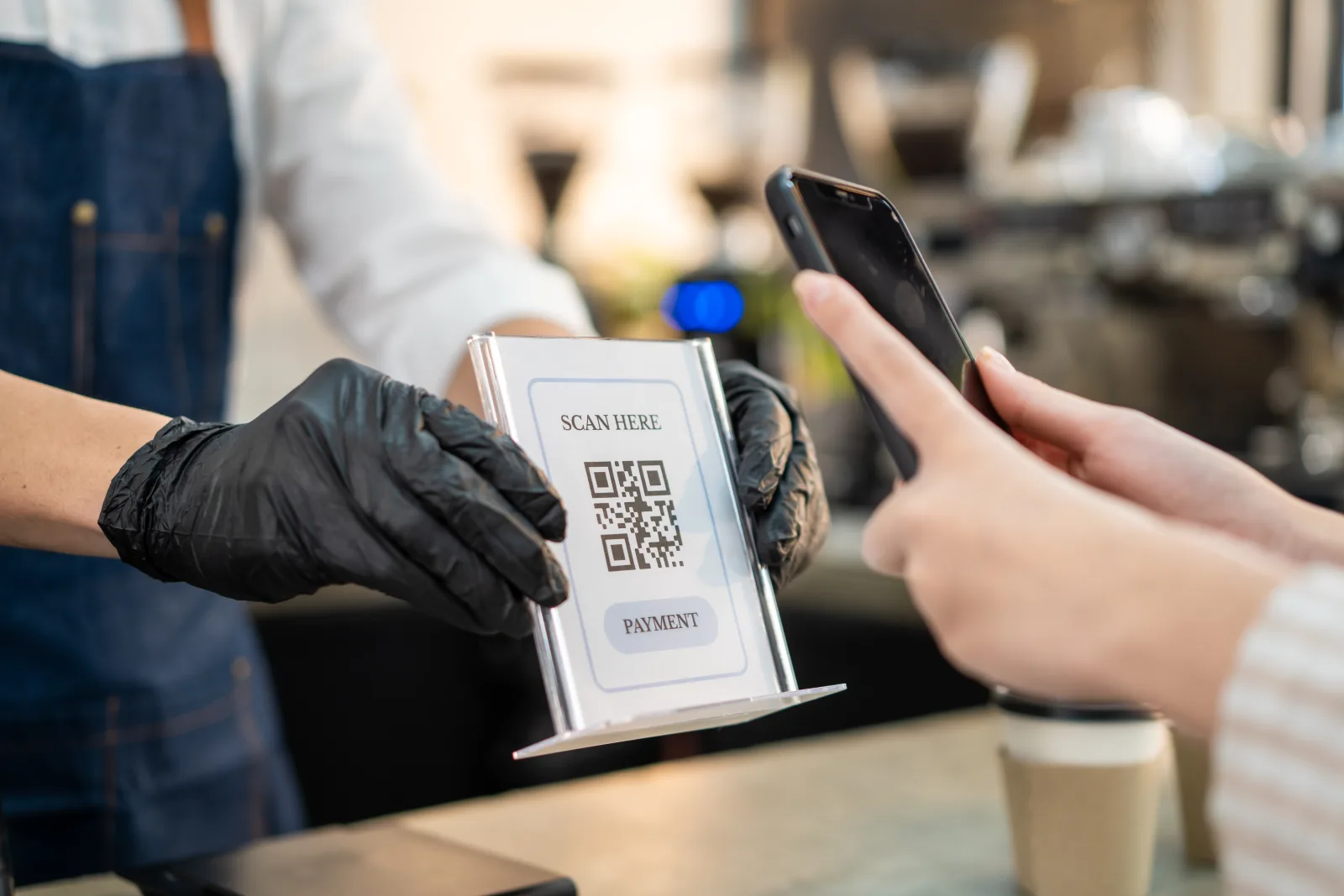
A GS1 QR code is not just a normal QR code with a product link inside it. In practical business use, people usually mean a QR code that follows GS1 Digital Link so the scan is tied to a real product identity, not just a random URL.
That matters because it changes what the code can do. Instead of being only a marketing shortcut, the QR code can connect a product’s identity to web content, consumer experiences, and, in the right setup, broader retail or operational workflows as well.
Quick answer: A GS1 QR code is usually a QR Code powered by GS1, meaning a QR code that uses GS1 Digital Link syntax. It can identify a product, carry additional data like batch or expiry, and connect scanners or smartphones to digital information in a more standardized way than a normal product QR code.
What is a GS1 QR code?
A GS1 QR code is a QR code used in a GS1 standards-based way so that the scan is connected to a product’s official identity. In most modern retail and consumer discussions, this usually means a QR code using GS1 Digital Link.
That lets the QR code do more than open a simple webpage. It can connect the product’s identity to digital content, support richer consumer experiences, and carry structured product-related data in a way that is more interoperable across systems.
Important terminology note
This topic can get confusing because different terms are used in different contexts. For a business audience, the simplest way to keep it straight is this:
| Term | What it usually means in practice |
|---|---|
| GS1 QR code | Often used informally to mean a QR code being used with GS1 standards in retail or packaging |
| QR Code powered by GS1 | The simpler business-friendly phrase for a QR code using GS1 Digital Link syntax |
| QR Code with GS1 Digital Link syntax | The more technical phrase used in GS1 retail guidance |
For most marketing, brand, packaging, and retail conversations, “QR Code powered by GS1” is the clearest phrase. For SEO, though, people still often search for “GS1 QR code,” which is why this article uses that wording in the title.
What is GS1 Digital Link?
GS1 Digital Link is the standards-based structure that turns a product identity into a web-ready URI. In plain language, it lets a barcode carry a product identifier in a way that can connect to digital information online while still staying rooted in GS1 identifiers.
That is why people sometimes say Digital Link “web-enables” a barcode. It creates a structured link between the product and the web, instead of treating the QR code as only a generic marketing shortcut.
Simple way to think about it: a normal QR code can point anywhere. A GS1 Digital Link QR code points somewhere in a way that is structured around the product’s identity.
What data can a GS1 QR code carry?
One reason GS1 QR codes matter is that they can support more than a bare product link. Depending on the use case, the code can carry a product identifier and also support additional structured data.
| Example data or outcome | Why it matters |
|---|---|
| GTIN | Anchors the code to a real product identity |
| Batch or lot number | Useful for traceability, recalls, and operational workflows |
| Serial number | Helps with product-level identification and authenticity scenarios |
| Expiry date | Relevant for food, healthcare, freshness, and markdown use cases |
| Consumer-facing digital content | Can support ingredients, allergens, photos, videos, reviews, recycling info, and more |
That combination is a big part of the value. One code can help connect the physical product with both operational data and digital consumer experiences.
Why brands and retailers care
Brands and retailers care about GS1 QR codes because they can reduce packaging complexity while opening up more useful scan outcomes. Instead of placing one code for internal workflows and another for consumer engagement, the long-term goal is often to make the packaging work harder with fewer compromises.
Consumer engagement
The code can connect shoppers to richer product content such as ingredients, tutorials, sustainability details, promotions, or FAQs.
Operational value
The same standards-based structure can support better traceability, recall workflows, and product data sharing across the supply chain.
Retail transition
Retail is moving toward broader 2D readiness, and many businesses are planning for a period where 1D and 2D barcodes coexist on pack.
Why now: For many retail teams, this is no longer just an innovation topic. It is becoming part of packaging, POS, traceability, and digital experience planning.
GS1 QR code vs regular QR code
A GS1 QR code and a regular QR code use the same familiar square QR symbol, but they are not the same in purpose or structure.
| Regular QR code | GS1 QR code / QR Code powered by GS1 |
|---|---|
| Often points to any URL or stores generic data | Uses a standards-based GS1 Digital Link structure tied to product identity |
| Usually built mainly for marketing or convenience | Built for broader brand, retail, and product-data use cases |
| Can be great for campaigns, menus, or simple links | Better when the code needs to stay grounded in GS1 identifiers and packaging workflows |
In short, a GS1 QR code is not just a prettier product QR. It is a QR code used within a stricter, more interoperable product-identity framework.
GS1 QR code vs GS1 DataMatrix
These are not direct enemies. In many cases, they are simply different 2D barcode options for different industries and use cases.
| QR Code powered by GS1 | GS1 DataMatrix |
|---|---|
| Often attractive for consumer-facing packaging and smartphone scanning | Common in healthcare and other more tightly controlled identification workflows |
| Uses QR symbology with GS1 Digital Link syntax | Uses DataMatrix symbology, often with GS1 element-string syntax |
| Strong for digital consumer experiences on pack | Strong for sectors that already standardized around DataMatrix |
For many retail teams, the more important decision is not “Which one is universally better?” but “Which 2D code fits our product, packaging, channel, and scanner environment best?”
How to create a GS1 QR code
The process is not just about generating a square code. The real work is deciding what identity, data, and experience the code should support.
1. Start with the product identity
Identify the GTIN and decide whether you also need batch, lot, serial, expiry, or other additional data.
2. Decide the business use case
Be clear whether the goal is consumer engagement, retail support, traceability, authenticity, or a mix of several use cases.
3. Build the Digital Link structure
Create the standards-based URI that maps the product identity into a web-ready structure.
4. Use your brand domain when possible
This usually creates a clearer trust signal and gives the brand stronger long-term control over the destination.
5. Choose the 2D carrier
Decide whether QR Code powered by GS1 or another GS1-compliant 2D carrier is the better fit for your context.
6. Test the real-world output
Test the printed result on packaging and, if relevant, test both smartphone scanning and retail-system behavior.
7. Plan the transition
In many cases, products will need both existing linear barcodes and newer 2D codes during the transition period.
Rule of thumb: if the barcode needs to serve both packaging and product identity strategy, do not treat it like a normal campaign QR code.
Best practices for product packaging and retail
A GS1 QR code belongs inside a broader packaging and data-governance workflow. The code is only one part of the system.
- Use your own brand domain whenever practical
- Keep product master data and identifiers clean before generating the code
- Design the printed code for the real packaging surface, not just a flat mockup
- Test the code on real packaging material under real scan conditions
- If POS is part of the goal, test scanner behavior, not only smartphone behavior
- Plan for a period where linear and 2D barcodes may coexist
- Keep the landing experience aligned with the product and the printed promise
Best practice: the code, the product identity, the page behind it, and the packaging all need to work together. A GS1 QR code is stronger when it is treated as part of a system, not just as a graphic.
Common mistakes to avoid
- Calling any product QR code a GS1 QR code without using the right standards structure
- Thinking GS1 Digital Link is only a marketing link
- Using a third-party domain when the brand domain should be used
- Skipping GTIN and data-governance work before barcode generation
- Testing only on phones when retail scanning is also part of the goal
- Assuming 1D barcodes disappear immediately instead of planning for coexistence
- Printing the code too small for the packaging and scan context
The biggest mistake is treating a GS1 QR code like a normal campaign QR code. It may look similar, but the real value comes from the standards structure behind it.
FAQ
What is a GS1 QR code in simple terms?
In simple business language, it is usually a QR code that uses GS1 Digital Link so the scan is connected to a real product identity and more standardized data.
Is a GS1 QR code the same as a normal QR code?
No. It uses the same QR symbol shape, but the content structure and business purpose are more standards-driven and product-identity-focused.
What is GS1 Digital Link?
It is the standards-based structure that turns GS1 identifiers into web-ready links that can support both product identity and digital experiences.
What data can a GS1 QR code include?
It can support identifiers such as GTIN and, depending on the use case, also batch or lot, serial, expiry, and links to consumer-facing information.
Do I still need a linear barcode like UPC or EAN?
In many current retail situations, yes. Many businesses are planning for a transition period where 1D and 2D barcodes coexist on pack.
Is a GS1 QR code the same as GS1 DataMatrix?
No. They are different 2D barcode options under GS1 standards. Which one fits best depends on the product, industry, and scanning environment.
Should the QR code use the brand’s own domain?
In most cases, yes. That usually creates a clearer trust signal and stronger long-term control over the destination.
Ready to create a standards-friendly product QR experience?
Create a QR code for packaging, product pages, digital content, and connected brand experiences, then build the scan journey around a clearer long-term structure.